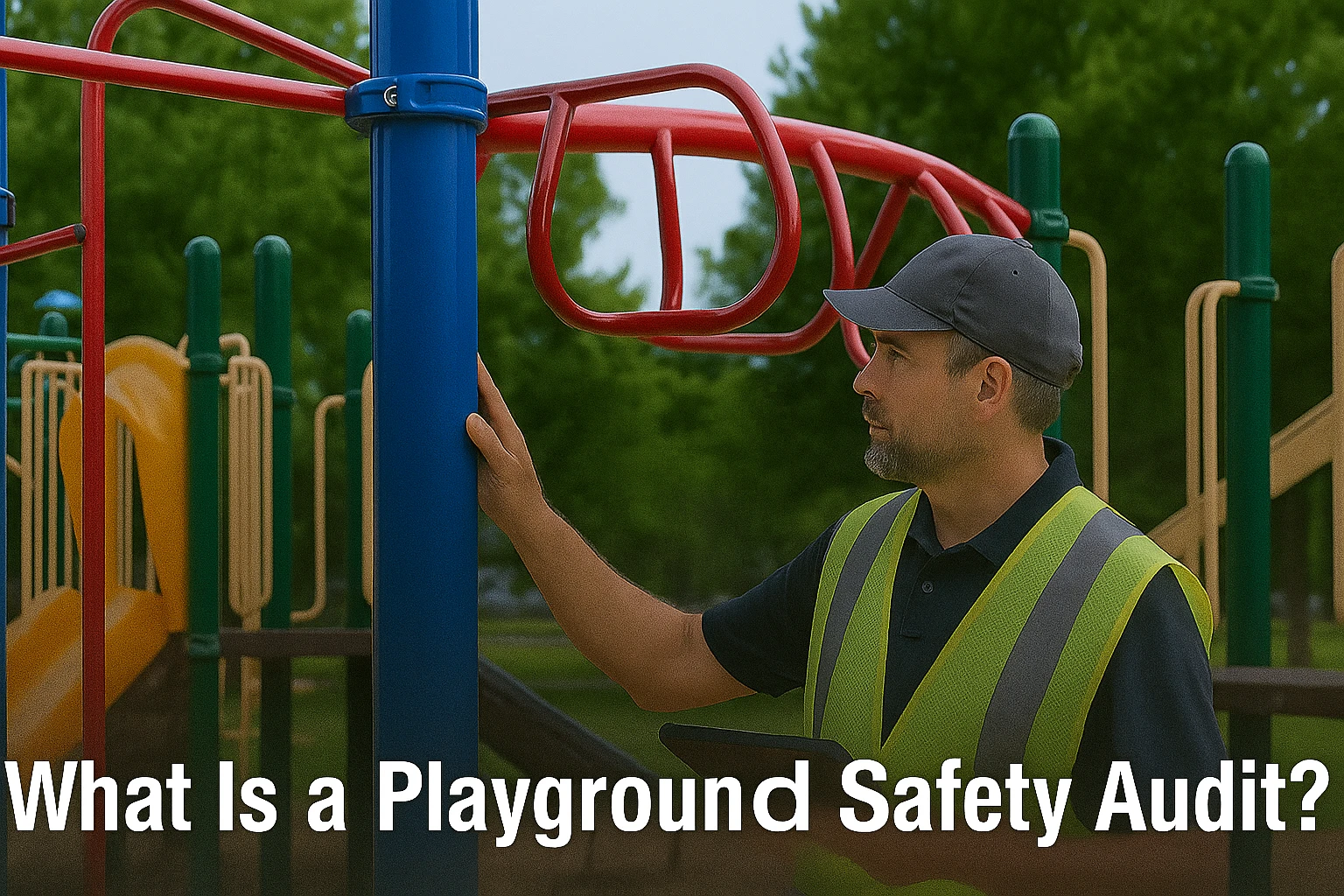
An important consideration in any playground safety audit is surface quality.
Unitary and loose-fill materials are evaluated differently; conduct your inspection appropriately.
Seventy percent of serious playground injuries are caused by poor surfacing.
Digital safety inspections guarantee compliance and minimize oversight.
Tracking and maintenance are enhanced when parks’ asset management software is integrated.
The surface beneath a swing or slide is your first line of defense against severe injuries, not just filler. The majority of playground injuries that warrant hospitalization are caused by improper surfacing, according to the U.S. Consumer Product Safety Commission (CPSC). Ground level is frequently where a failed playground safety audit begins.
Shock-absorbing capacity, material type, and surface depth are all thoroughly examined.
According to ASTM F1292, your surfacing must absorb impact in the event that a child falls from a height. If not? Your liability risk increases while your compliance score decreases.

In inspections, each surface type has advantages and disadvantages. This is a summary:
| Material Type | Pros | Cons |
|---|---|---|
| Engineered Wood Fiber | Affordable, impact-absorbing | Requires frequent top-ups |
| Rubber Mulch | Good drainage, ADA-compliant | Can scatter if not contained |
| Poured-in-Place Rubber | Long-lasting, low maintenance | Higher upfront cost |
| Artificial Turf | Consistent surfacing | Needs solid underlayer (shock pad) |
Note: During a playground safety inspection, your surfacing will be flagged if it is uneven or less deep than necessary.
Failing an audit exposes you to legal action. Your city, organization, or business may be held accountable if it is determined that the surfacing failed to meet safety regulations and a child is hurt. To stay ahead of problems, many parks use certified playground safety software or collaborate with a playground inspection company.
Certified safety inspectors typically check:
Surface depth and compaction
Drainage effectiveness
Edge containment systems
Trip hazards and displacement
Wear patterns under swings/slides
These are standardized within tools like the ParkZapp Playground Safety Audit system, which aligns with ASTM and CPSC guidelines.
Audits can be daunting if you oversee several locations. A company that inspects playgrounds can help:
Municipalities and school systems are further protected by the fact that their reports are frequently admissible in court.
Paper reports are unreliable. They get lost, are hard to track, and aren’t scalable. Instead, digital safety inspections powered by apps like ParkZapp make it easy to:
Standardize reporting
Upload photos of surfacing damage
Track repairs with timestamps
Generate audit-ready reports instantly
You get a system that supports playground safety audits without the paperwork nightmare.
Imagine being able to pinpoint the precise time and location of your most recent surfacing inspection. That is the advantage of combining asset management software for parks with inspections.
With this type of integration, you can:
Using platforms like ParkZapp’s asset tracking features lets facility managers move from reactive to preventive care.
Real-time tools are superior to manual logs. In the USA, a playground inspection smartphone app offers:
The audit process is now proactive rather than reactive thanks to contemporary parks and playground inspection software.
It varies by height and material. For example, 12 inches of engineered wood fiber is recommended for equipment up to 8 feet.
High-use parks should inspect surfacing weekly. Lower-use areas may follow a monthly schedule, but should be spot-checked after storms.
Yes, but only if the turf has a compliant underlayer that meets shock-absorption requirements.
Yes. Use parks and playground inspection software in the USA like ParkZapp that includes surfacing checklists and maintenance logs.
Playground surfacing isn’t just a maintenance concern—it’s central to every playground safety audit. From managing risk to improving public safety scores, choosing and maintaining the right materials can protect your community and your reputation.
Need a smarter way to inspect?
Try ParkZapp’s certified playground safety software →
ParkZapp is a user friendly and customizable Park inspection application integrated with CPSC,CSA & ASTM standards.