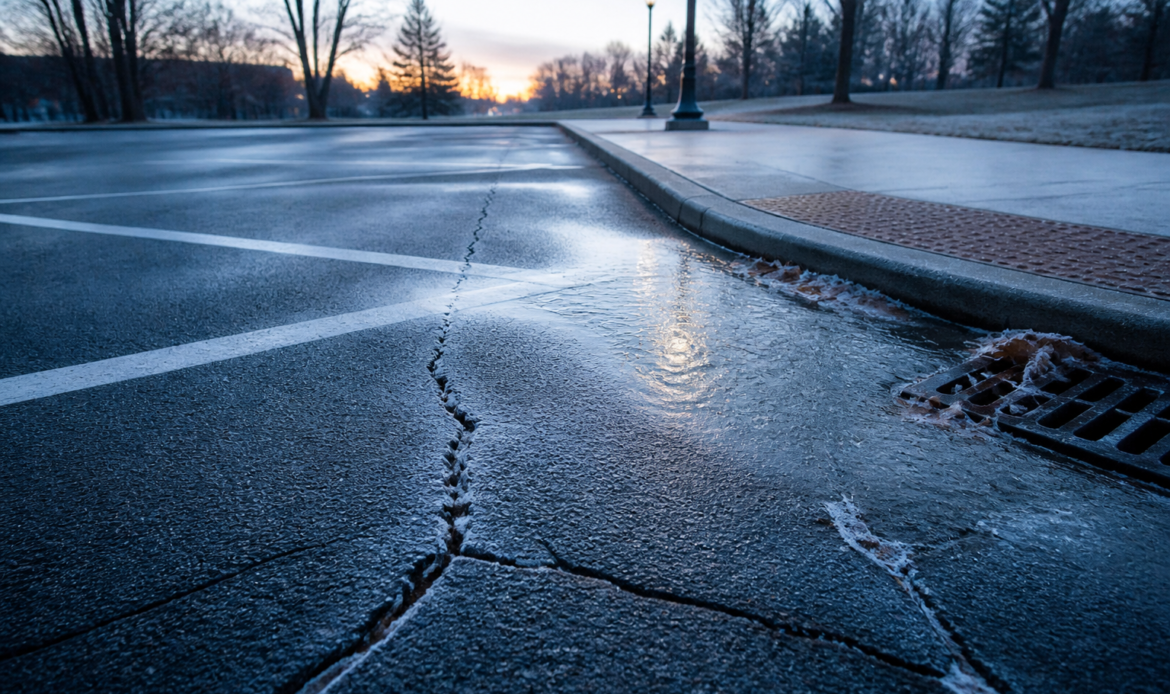
Every winter, parks departments field the same call: a visitor slipped in a parking lot or on a pathway, and nobody can find the last inspection record. By then, the damage is done — to the visitor and to the municipality’s risk exposure. The good news is that this is entirely preventable, and it starts with getting your parking lot and sidewalk inspection program in order before the first freeze.
Why Winter Surface Inspections Deserve a Dedicated Workflow
Parking lots and sidewalks are often treated as background infrastructure — something you deal with after the playgrounds and buildings are squared away. That mindset is costly. These surfaces carry the highest foot traffic of any park asset, they degrade faster under freeze-thaw cycles, and they are the first thing a visitor encounters when they arrive.
Winter accelerates every existing problem. A hairline crack in October becomes a heaving trip hazard in January. Standing water that drains slowly in fall turns into a sheet of ice overnight. If your team has not documented baseline conditions before the season starts, you have no way to prove that a hazard appeared after your last inspection — and that matters enormously in a liability claim.
The Most Common Winter Surface Hazards to Catch Early
A solid pre-winter inspection should focus on the conditions most likely to become dangerous once temperatures drop. Train your inspectors to look for:
- Pavement cracking and heaving — particularly at seams, curb cuts and drainage edges where water collects and freezes
- Drainage failures — clogged drains and low spots that pool water and become ice patches
- Damaged curb cuts and accessible ramps — a cracked or uneven ramp is dangerous year-round but becomes a serious ADA concern when ice accumulates
- Faded or missing line markings — snow covers lane markings quickly, so any that are already worn should be noted and queued for repainting before spring
- Loose or missing signage — warning signs, speed limit markers and accessible parking designations must be visible even in low-light winter conditions
- Sidewalk panel displacement — vertical offsets of even a small amount are a consistent trip hazard and should be measured and recorded
- Lighting condition — shorter days mean more visitors arriving and leaving in the dark; non-functioning fixtures should trigger a work order immediately
Building a Pre-Season Baseline You Can Defend
The most important thing your inspection program can produce is a timestamped, photo-documented baseline. If a claim arises in February, you need to be able to show exactly what condition the surface was in before snow and ice arrived, when it was last inspected and what corrective action was taken.
Paper-based inspection forms create gaps here. Forms get lost, photos are stored in someone’s phone rather than attached to the record, and there is no easy way to compare this season’s findings to last year’s. That fragmented picture is exactly what claimants’ attorneys look for.
Digital inspection tools close those gaps. With a platform like ParkZapp, inspectors use a mobile app to complete structured checklists in the field, attach photos directly to each finding and submit records that are immediately visible in the admin panel. Every entry is timestamped and tied to a specific asset, so your parking lot on the north side of Riverside Park has its own inspection history that you can pull up at any time.
Connecting Inspections to Work Orders Before Problems Compound
A completed inspection is only valuable if it drives action. One of the most common breakdowns in parks maintenance is the gap between finding a deficiency and getting it repaired. An inspector notes a drainage problem in the southeast lot on November 10. If that note lives in a paper form or a disconnected spreadsheet, there is a real chance it sits unaddressed until January — when it has become an ice hazard and a liability.
Your workflow should move a finding directly into a work order with as little friction as possible. The work order should capture the asset, the deficiency, the priority level and the assigned crew. When the repair is complete, that closure should be documented and linked back to the original inspection finding.
ParkZapp’s work order tools are designed to support exactly this kind of closed-loop process. Inspectors flag issues in the field, those issues become work orders visible to supervisors in the admin panel, and completed repairs are recorded against the asset history. When an audit or a legal review comes around, the full chain of documentation is in one place.
Frequency and Timing: How Often Should You Inspect?
There is no single universal answer, but a practical winter approach for most parks departments includes at least three distinct inspection moments:
- Pre-season baseline — completed before the first hard freeze, documenting existing conditions so you have a clear starting point
- Post-storm inspections — conducted after significant snow, ice or freeze-thaw events to catch new hazards quickly
- Routine scheduled inspections — at least monthly through the winter, more frequently for high-traffic or high-risk surfaces
High-traffic areas — main parking lots at community centers, trailheads and recreation facilities — should be prioritized for more frequent checks. Low-use areas may warrant a monthly cadence, but should never go uninspected entirely.
Document your inspection schedule in writing and stick to it. A consistent, predictable schedule is evidence of a systematic safety program. An ad hoc one is evidence of the opposite.
Keeping Your Risk Manager in the Loop
Municipal risk managers increasingly want to see inspection data, not just assurances that inspections are happening. If your parks department is still reporting verbally or handing over a stack of paper forms at the end of the season, that creates friction with the risk management side of the house.
Digital inspection records change that relationship. When your risk manager can log in to an admin panel, run a report on all parking lot and sidewalk inspections completed in the last 90 days and see which deficiencies were corrected and when, they have the documentation they need to defend the municipality’s safety practices. It also makes the annual insurance renewal conversation a great deal more straightforward.
Making Sure Your Team Is Ready
The best inspection program in the world produces poor results if the people doing the inspections are not clear on what they are looking for or how to document it. Before the season gets underway, make sure your team has:
- Reviewed the inspection checklist and understands each item
- Practiced capturing and attaching photos to findings in the field
- A clear understanding of which deficiencies require immediate escalation versus routine work orders
- Access to the mobile app on their device and a quick-reference guide for first-time users
A short refresher walkthrough at the start of the season takes less than an hour and pays dividends all winter long.
Start the Season with Documentation You Can Stand Behind
Parking lots and sidewalks will not inspect themselves, and winter will not wait. Getting your inspection workflow organized now — with clear checklists, photo documentation, connected work orders and a consistent schedule — is the most practical thing your department can do to reduce liability and keep visitors safe through the coldest months of the year.
If your current process relies on paper forms, disconnected spreadsheets or informal walkthroughs, this is the right moment to upgrade. ParkZapp’s digital inspections, mobile app and work order tools are built for exactly this kind of seasonal readiness work, and getting your team set up before the first freeze is far easier than scrambling after an incident.
See how ParkZapp can help your department build a defensible winter inspection program. Request a demo at parkzapp.com/parkzapp-demo/ and we will walk you through the platform from field checklist to admin panel.