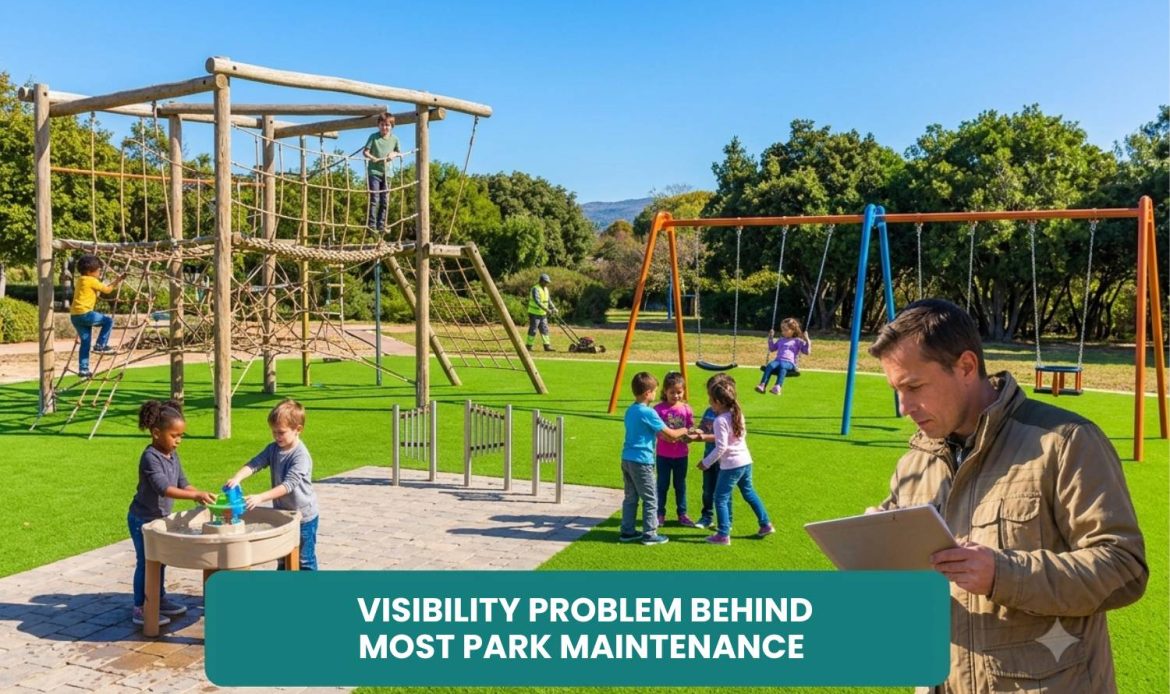
The Visibility Problem Behind Most Park Maintenance Delays
Most park maintenance delays don’t start in the field.
They start when visibility breaks.
Across parks, recreation facilities, sports complexes, playgrounds, and community spaces, inspections happen every day.
Issues are identified.
Assets are reviewed.
Maintenance needs are documented.
That part usually happens.
The challenge begins after the issue is found.
Because finding an issue and resolving an issue are two very different things.
And when visibility breaks between those two steps, maintenance delays, public complaints, and operational inefficiencies start to build.
The Growing Complexity of Public Space Management
Today’s parks departments manage far more than green spaces.
Many oversee:
- Playgrounds
- Athletic fields
- Recreation centers
- Walking trails
- Restroom facilities
- Parking lots
- Lighting infrastructure
- Public amenities
Often across dozens—or even hundreds—of locations.
As communities grow, public expectations grow with them.
Residents expect:
- Safe facilities
- Clean environments
- Fast issue resolution
- Well-maintained assets
- Responsive service
Meeting those expectations becomes increasingly difficult when operational information is spread across multiple systems.
Where Parks Workflows Commonly Break Down
Many leaders assume maintenance delays happen because teams lack resources.
In reality, the problem is often visibility.
Several operational gaps appear repeatedly across parks and recreation departments.
1. Complaint Tracking Gaps
Issues are reported through multiple channels.
Phone calls.
Emails.
Conversations with staff.
Online forms.
When reports are scattered, visibility disappears.
Teams often spend more time locating information than resolving issues.
2. Inspection Inconsistency
Some assets receive regular inspections.
Others depend on staffing availability and schedules.
Without consistent documentation, important maintenance needs can remain unnoticed for extended periods.
3. Work Order Disconnects
An issue is identified.
A work order is created.
But status updates often remain isolated within departments.
Supervisors may not know:
- What’s open
- What’s delayed
- What’s completed
Until someone asks.
4. Manual Operational Updates
Many parks teams still rely on:
- Emails
- Phone calls
- Text messages
- Spreadsheets
To manage maintenance activities.
The result is delayed communication and limited visibility.
5. Delayed Maintenance Action
Small maintenance issues rarely stay small.
When corrective actions are delayed, minor problems often become larger operational concerns.
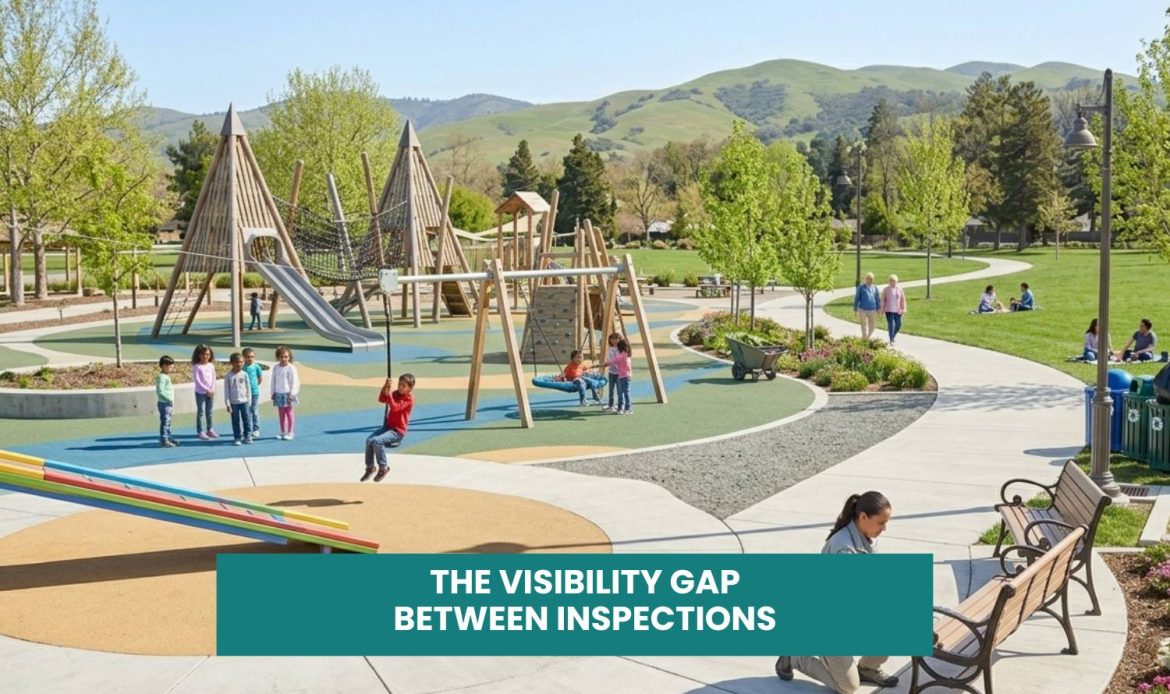
The Visibility Gap Between Inspections
Inspections are essential.
But inspections only capture issues that are seen during the inspection process.
Many operational issues appear between inspections.
A loose playground component.
A damaged bench.
A broken light fixture.
A restroom concern.
A vandalized asset.
Visitors often notice these problems long before park staff do.
The question becomes:
How quickly can that information reach the right team?
Extending Visibility Through QR Code Issue Reporting
One of the most effective ways to improve issue visibility is to reduce the barriers to reporting.
ParkZapp’s QR Code Feedback feature allows parks departments to place QR codes directly on:
- Playgrounds
- Benches
- Sports facilities
- Restrooms
- Equipment
- Park assets
When a visitor notices an issue, they simply scan the QR code and submit a report.
The report is automatically converted into a work order.
No phone calls.
No emails.
No paper notes.
No lost messages.
Simply:
Scan → Report → Track → Close
This creates earlier visibility into issues and helps parks teams respond before problems escalate.
The Visibility Gap Between Inspections
Inspections are essential.
But inspections only capture issues that are seen during the inspection process.
Many operational issues appear between inspections.
A loose playground component.
A damaged bench.
A broken light fixture.
A restroom concern.
A vandalized asset.
Visitors often notice these problems long before park staff do.
The question becomes:
How quickly can that information reach the right team?
Extending Visibility Through QR Code Issue Reporting
One of the most effective ways to improve issue visibility is to reduce the barriers to reporting.
ParkZapp’s QR Code Feedback feature allows parks departments to place QR codes directly on:
- Playgrounds
- Benches
- Sports facilities
- Restrooms
- Equipment
- Park assets
When a visitor notices an issue, they simply scan the QR code and submit a report.
The report is automatically converted into a work order.
No phone calls.
No emails.
No paper notes.
No lost messages.
Simply:
Scan → Report → Track → Close
This creates earlier visibility into issues and helps parks teams respond before problems escalate.
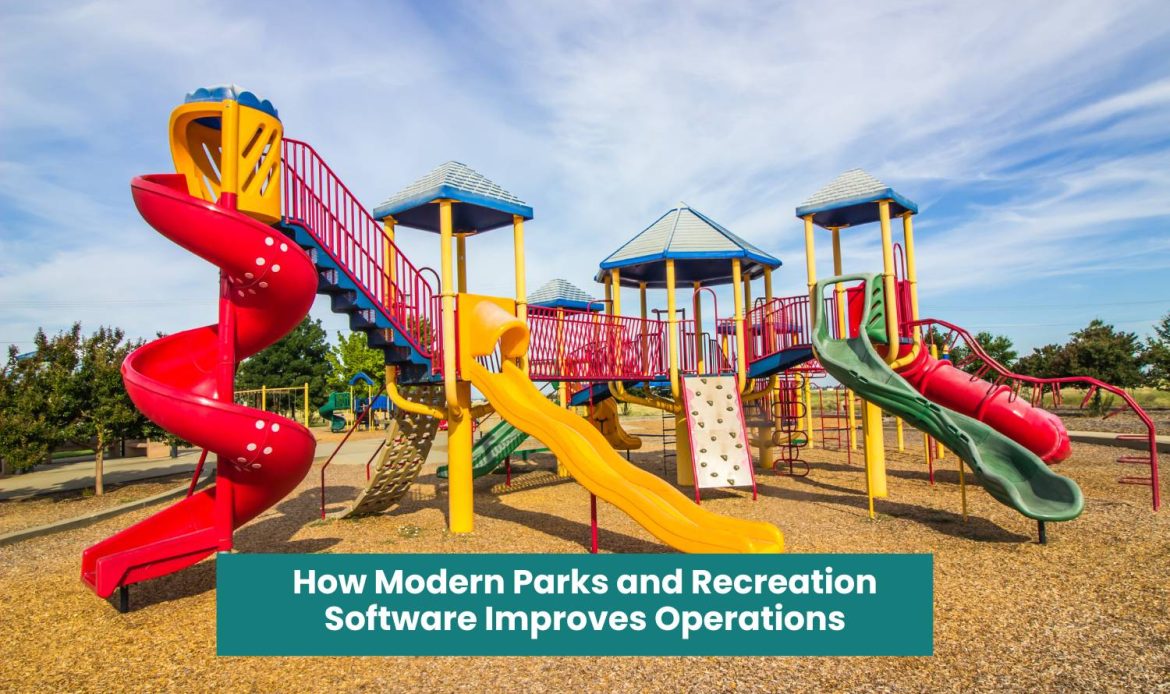
How Modern Parks and Recreation Software Improves Operations
Technology is no longer simply about record keeping.
Modern parks and recreation software creates operational continuity.
Instead of managing inspections, assets, maintenance activities, and reporting separately, departments gain one connected operational workflow.
Key capabilities include:
Asset Management
Track the complete lifecycle of:
- Playgrounds
- Sports equipment
- Buildings
- Vehicles
- Benches
- Infrastructure assets
Centralized asset records improve planning, budgeting, and maintenance visibility.
Digital Inspections
Field teams can:
- Complete inspections on-site
- Attach photos
- Document hazards
- Record deficiencies
- Trigger follow-up actions
This improves documentation quality while reducing administrative effort.
Automated Work Orders
When issues are identified:
- Work orders are generated automatically
- Teams receive notifications
- Supervisors gain visibility
- Progress remains trackable
This reduces delays between identification and action.
Centralized Reporting
Leadership gains access to:
- Inspection completion rates
- Maintenance status
- Asset condition information
- Operational dashboards
- Compliance documentation
Decision-making becomes proactive rather than reactive.
The Cost of Limited Visibility
When visibility breaks down:
- Maintenance backlogs grow
- Public dissatisfaction increases
- Response times slow
- Accountability weakens
- Operational risk rises
The issue is rarely effort.
The issue is coordination.
And coordination depends on visibility.
How ParkZapp Supports Operational Visibility
At ParkZapp, we help parks teams connect:
- Inspections
- Assets
- QR-reported issues
- Work orders
- Maintenance activities
- Operational reporting
Into one connected workflow.
The objective is simple:
Ensure every issue remains visible from discovery through closure.
Because visibility drives accountability.
And accountability drives outcomes.
The Future of Public Space Management
The future of parks operations is not about collecting more information.
It is about creating actionable visibility.
Leading municipalities are moving toward connected operational environments where:
- Inspections trigger actions
- Issues generate work orders automatically
- Assets maintain complete histories
- Leadership gains real-time visibility
- Communities receive faster responses
The goal is not more technology.
The goal is better operational outcomes.
Public space management is becoming more complex.
Parks departments must manage growing infrastructure, rising public expectations, and increasing accountability requirements—all while working within resource constraints.
Success depends on more than inspections.
Success depends on visibility.
The departments that perform best are those that can see issues clearly, act quickly, and maintain accountability from identification through resolution.
Can your team instantly see:
✓ Every open issue?
✓ Every overdue work order?
✓ Every unresolved inspection finding?
If not, visibility may be creating more operational risk than you realize.
See how ParkZapp helps parks teams improve inspections, asset management, issue reporting, maintenance tracking, and operational visibility across every facility they manage.
FAQ
What is parks and recreation management software?
Parks and recreation management software helps municipalities manage inspections, assets, maintenance activities, work orders, and operational reporting from a centralized platform.
How does parks software improve maintenance operations?
It improves visibility by connecting inspections, work orders, assets, maintenance activities, and reporting into one workflow, helping teams respond faster and track issues more effectively.
What is QR Code Feedback?
QR Code Feedback allows visitors to scan a QR code placed on a park asset or facility and instantly report an issue. The report automatically generates a work order for the maintenance team.
Can parks software help with inspections?
Yes. Digital inspections allow teams to document findings, capture photos, record hazards, and trigger corrective actions directly from the field.
Who typically uses parks and recreation management software?
Parks directors, recreation managers, public works leaders, municipal maintenance teams, facility managers, and grounds management teams commonly use these platforms.
Why are municipalities investing in digital parks operations?
Municipalities are seeking better visibility, faster issue resolution, stronger accountability, improved asset management, and more efficient maintenance operations across multiple locations.
Latest Blogs
-
 Seasonal Park Readiness: Managing High Traffic Periods and Events
 -
 Can Preventive Maintenance Reduce Park Downtime?
 -
 The Visibility Problem Behind Most Park Maintenance Delays
 -
 How Maintenance Tracking Software Actually Improves Response Time in Public Facilities
 -
 How to Turn Daily Metrics into Executive Decisions